Key takeaways: RTP is about millions of spins, not your evening. A 96% game holds on to roughly €4 for each €100 you put through it, which makes your session’s expected cost a simple sum: stakes times house edge. Variance decides the rest.
What RTP means in plain numbers
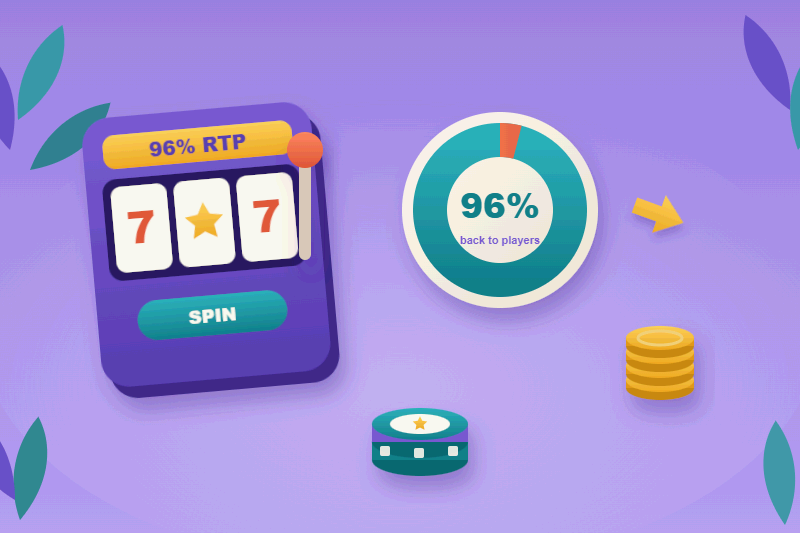
Take a slot listed at 96%. Over its whole lifetime, every €100 that players feed into it returns about €96 in wins. The other €4 is the house edge, and that’s the casino’s margin.
“Lifetime” is doing a lot of work in that sentence. The studio calculates the figure from the game’s maths, and a testing lab confirms it over millions of simulated rounds. Your 300 spins after dinner are a speck in that sample. They can end up pretty much anywhere.
How RTP turns into a cost for your bankroll
I find it easiest to treat RTP as a price tag on each bet. Multiply everything you stake by the house edge and you’ve got the expected cost of the session:
| Spin size | Spins | Total staked | Expected cost at 96% | Expected cost at 94% |
|---|---|---|---|---|
| €0.50 | 400 | €200 | €8 | €12 |
| €1 | 500 | €500 | €20 | €30 |
| €2 | 1,000 | €2,000 | €80 | €120 |
Look at what drives the cost. It’s the number of spins, not the size of the deposit, because winnings go straight back into play. And that harmless looking two point gap between 96% and 94%? It means paying half as much again.
Why your session never matches the RTP
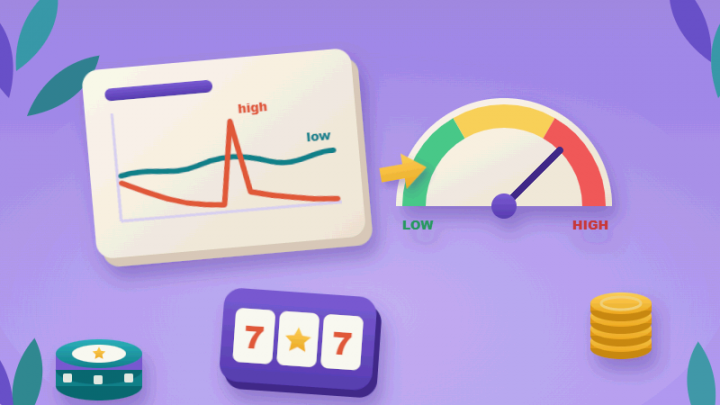
One night a 96% slot pays you 140% of what you bet. The next, 40%. Same game. On most modern slots the swings are huge, because a big chunk of the return is packed into rare bonus rounds and top wins. So the typical session finishes under the RTP, and a handful finish way over it.
Is a cold slot “due”? No. Every spin is independent. A machine that hasn’t paid for an hour has the very same odds on the next spin as one that just hit.
The same slot can have different RTPs
Here’s something most players never notice. A lot of providers release a single game in several RTP versions, say one around 96% and another around 94%, sometimes lower still, and the casino chooses which to run. The figure quoted in a review may not match the copy you’re actually spinning.
- Open the slot’s info or help screen.Look for a little “i” or the menu button.
- Scroll the rules until you hit “theoretical RTP” or “return to player”.
- Check that number against the one you had in mind.Lower than that? Then each spin costs you more on that site.
While you’re in there, check two more things. Bonus buy features often come with a separate RTP, and slots with a progressive jackpot tend to show a lower base RTP, since part of each stake goes into the prize pot.
Using RTP to protect your budget
Got a choice between versions? Take the higher RTP, it makes every spin cheaper. Then plan sessions in spins rather than euros. With 500 spins at €1 on a 96% game, you’re looking at roughly €20 of cost on average, with real room for the result to land far above or below that. Our slot reviews show RTP and volatility for every game, which makes the comparison quick.

Daniel Carter, Head of Reviews
Daniel Carter is the Head of Reviews at SlotsReview.org, specializing in online slots, RTP analysis, volatility, and bonus features. He oversees the site's review content, focusing on accuracy, transparency, and clear explanations of game mechanics to help players make informed decisions.