Key takeaways: Volatility is the shape of the payouts, not their total. On a low volatility game you collect lots of little wins and the ride stays smooth. High means long droughts broken by rare big hits. Choose based on your bankroll, how long you want to play and whether there’s a bonus to clear.
Same RTP, very different ride
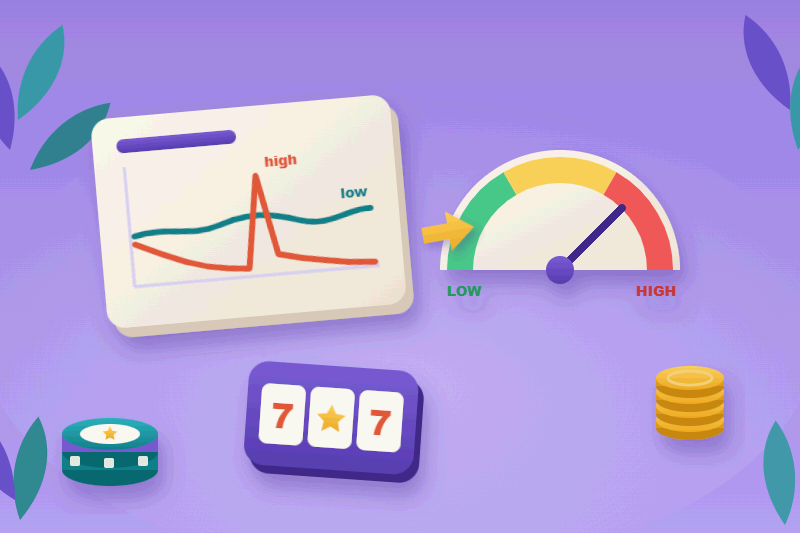
RTP gives you the average. Volatility is about the bumps on the way there. Take a pair of 96% slots. On the first, something lands maybe every third spin, usually less than you bet. The second can go a hundred spins with almost nothing, then drop a bonus round worth a few hundred times your stake.
Give them a few million spins and they’d end up returning the same. Give them your 300 spins on a Friday night? Completely different stories. One leaves you playing till midnight, the other might be over before your drink’s finished.
High vs low volatility at a glance
| Low volatility | Medium volatility | High volatility | |
|---|---|---|---|
| How often it pays | Often | Regularly | Rarely |
| Typical win size | Small, often under your bet | Mixed | Mostly small, with rare very large hits |
| Max win | Often a few hundred times the bet | Around 1,000x to 5,000x | Often 5,000x and well above |
| Bankroll swings | Gentle | Moderate | Sharp |
| Good for | Long sessions, bonus wagering | All round play | Chasing a big feature, short sessions |
Treat the table as a rough guide. I’ve seen games sold as “medium” that swing like the wildest high volatility titles, so the paytable is worth a look as well.
How to spot volatility when the label is missing
Lots of studios skip the rating entirely. Doesn’t matter, the clues are all there:
- Max win. Anything at 10,000x or higher is almost certainly high volatility. A prize that size gets paid for with a lot of dead spins.
- Bonus buy. If you can buy the feature for around 100x your stake, the game’s built around rare, heavy bonus rounds.
- Paytable spread. Top symbols paying hundreds of times your bet while the low ones pay pennies? Expect lumpy results.
- Hit frequency. A few providers print it in the info screen. If it’s 1 in 3 or better, you’re probably looking at a calmer game.
Which volatility fits what you want
Before loading anything, decide what tonight is for.
- Tight budget and a long evening ahead?Low volatility is your friend here, since a balance that drifts instead of lurching makes €50 go surprisingly far.
- Working through bonus wagering?Low or medium, usually. You need lots of bets in a row, and a high volatility game has a habit of emptying the balance halfway there.
- Dreaming of one massive feature?That’s what high volatility is for. Just treat the stake as gone from the start, because most sessions finish without the hit.
- Can’t decide?Medium sits in between, and a lot of the best known games sit there.
The myth about high volatility
People often assume high volatility slots pay more. They don’t, they pay differently. At equal RTP the expected cost per spin is the same. The high volatility game just piles more of its return into rare moments, so a typical session ends lower and the odd one ends much higher. Enjoy steady play? Then don’t force yourself onto a wild game because someone online said it’s where the big money is. You can filter our slot reviews by volatility and shortlist games that fit how you play.

Daniel Carter, Head of Reviews
Daniel Carter is the Head of Reviews at SlotsReview.org, specializing in online slots, RTP analysis, volatility, and bonus features. He oversees the site's review content, focusing on accuracy, transparency, and clear explanations of game mechanics to help players make informed decisions.