Key takeaways: Getting the coin right is half the job, the network is the other half. Do a small test transfer, read the minimum, fill in any memo or tag the casino shows, and keep the transaction ID somewhere. If you’d rather your balance didn’t wobble, a stablecoin like USDT keeps it steady.
Why crypto deposits need more care than card payments
With a card, a mistake can usually be undone. Crypto is different. Once the blockchain has confirmed a transfer, that’s final. There’s no support team anywhere that can reverse it for you. Sent it somewhere wrong? Then you’re relying on whoever controls that address being decent enough to return it.
Lost deposits tend to happen the same handful of ways, and every one of them is easy to dodge once you’ve seen it.
Network first, coin second
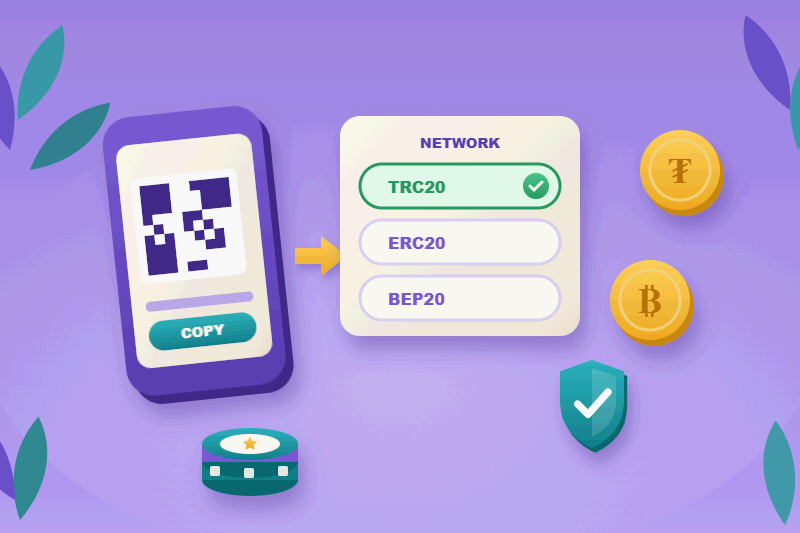
USDT is the classic trap. The same coin runs on several blockchains, and the casino gives you a different address for each one.
| USDT network | Address starts with | Typical fee | Common mix-up |
|---|---|---|---|
| TRON (TRC20) | T | Low | Sending from an exchange that defaults to another network |
| Ethereum (ERC20) | 0x | Can be high at busy times | Confusing it with BEP20, both use 0x addresses |
| BNB Smart Chain (BEP20) | 0x | Low | Same address format as ERC20, wrong chain still goes through |
| Solana | Letters and numbers, no prefix | Very low | Casino may not support it at all |
The ERC20 and BEP20 mix-up is the nasty one. Your wallet has no idea anything’s wrong, since the address format is identical. The coins go out, and the casino, watching the other chain, simply never sees them arrive.
Your crypto casino deposit checklist
- Open the casino cashier and pick your coin and then the network, in that order.Over in your wallet or exchange, select the identical network.
- Use the copy button for the address rather than typing it out.It’s also worth eyeballing the first four and last four characters before hitting send, since there’s malware that silently replaces whatever you copied.
- Look for a memo, tag or comment field.XRP, Stellar and TON deposits often need one, and without it the casino can’t match the payment to your account.
- Check the minimum deposit.Amounts below it may not be credited at all, and some casinos don’t refund them.
- Send a small test amount the first time, wait for it to show up in your balance, then send the rest.
- Save the transaction ID (TXID).If anything goes wrong, support will ask for it.
What happens to your balance when prices move
Some casinos keep your balance in the coin you deposited. Others convert it straight into dollars or euros. That changes a lot. Deposit Bitcoin into a balance held in BTC and a 10% price drop shrinks your bankroll even if you never place a bet. A balance converted to dollars avoids that, but you may pay a conversion spread twice, once in and once out.
That’s a big part of why USDT and USDC are so common at crypto casinos: their value barely moves. Before you send something volatile, find out from the cashier or the terms which way your casino does it.
Things to check outside the cashier
- Your exchange’s rules. Some exchanges restrict or review transfers to gambling sites, and sending straight from them can get your exchange account questioned.
- Bonus terms tied to crypto. Some welcome offers exclude certain coins, or calculate wagering in dollars even if you play in BTC.
- Withdrawal minimums and fees for the same coin, so you don’t deposit something that’s expensive to cash out.
- The casino’s license and withdrawal record, before any of the above.
Getting these right takes two minutes and saves most of the support tickets crypto players end up writing. For casinos that handle coins and networks well, see our crypto casinos comparison.

Daniel Carter, Head of Reviews
Daniel Carter is the Head of Reviews at SlotsReview.org, specializing in online slots, RTP analysis, volatility, and bonus features. He oversees the site's review content, focusing on accuracy, transparency, and clear explanations of game mechanics to help players make informed decisions.